Transport sandblasting · Perth & WA
Transport Sandblasting WA
Trucks, trailers, ute trays, tankers and rolling stock stripped back and prepped for primer, paint or new livery.
In short
We strip fleet vehicles and rolling stock at your depot, so units are off the road for the blast and repaint window only. Wet media keeps the abrasive on the ground, so the rest of the yard keeps working while we do it.
What comes off
Fleet livery, two-pack, primer, underseal, road grime and the rust that starts wherever a stone chip let water in. Chassis rails, cross-members, tippers, tanks, trays and drawbars all come back to sound steel.
Fleet vehicles earn nothing parked, so the work is planned around your run. We come to the depot, and wet media means the yard around us keeps operating.

Chassis, and why it rusts first
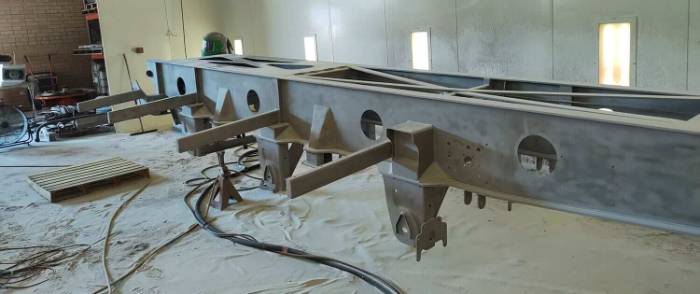
Chassis rails and cross-members collect water, salt and road film in places nobody washes. By the time surface rust is visible on the outside, the inside of the section is usually worse. Blasting is the only way to see and treat it properly before a recoat.
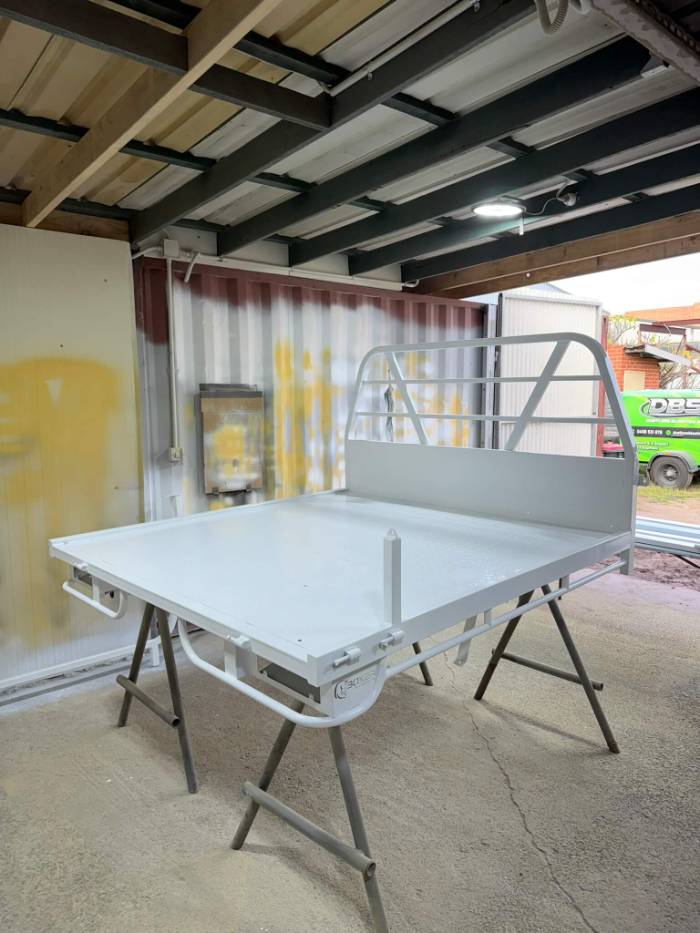
Trays and tippers are the other repeat offender — a load surface takes a hammering, and paint over pitted steel never lasts.
Livery and repaint prep
A new livery is only as good as what is under it. We strip to bare steel where the old system has failed and sweep-blast where it is sound, so your painter gets a consistent, keyed surface rather than a patchwork.
Vinyl, adhesive residue and signwriting come off in the same pass.
Rail and heavy rolling stock
We have blasted ballast wagons and carriages back to clean steel for repaint, including graffiti-affected units. Containment matters on rail: spent media is captured and removed rather than left in the ballast.
How the job runs
Depot visit
Units, access, water and power, and the window each vehicle can be off the road for.
Mask and contain
Glass, lights, decals to be kept, brake and hydraulic components protected; media captured.
Blast
Full strip where the system has failed, sweep blast where it is sound.
Hand over
Rinse, inhibitor on bare steel, photos of corrosion found for your maintenance records.
Trailers, trays and tankers behave differently
Chassis and running gear
Rails, cross members and suspension carry the heaviest build-up: road grime, bitumen, old chassis black and rust in the flanges. It takes a hard cut and good access underneath, so the unit goes up on stands or a hoist where possible. Air lines, brake components, seals and slack adjusters are masked before anything starts.
Trays, bodies and thin panel
Tray sides, headboards and body panels are light gauge and want the same restraint as automotive panel work — lower pressure, more standoff, keep moving. Alloy trays get soda or a fine media so the surface is not textured under the new finish. On alloy panels we often reach for soda on aluminium instead.
Tankers and pressure vessels
What the tank last carried decides what happens next. Anything that has held fuel or chemical needs to be purged, gas-free certified and documented before work starts — that is not something to improvise on the day. Externally, tanker barrels are usually alloy or stainless, which rules out a hard ferrous cut.
Off the road, back on the road
Downtime is the real cost of the job. Blasting, inhibitor and first coat are sequenced so the unit is not standing bare overnight in Perth humidity, and where a fleet is involved we work through it in batches so you always have units running. Flash rust, explained covers why the gap matters.
Recent jobs
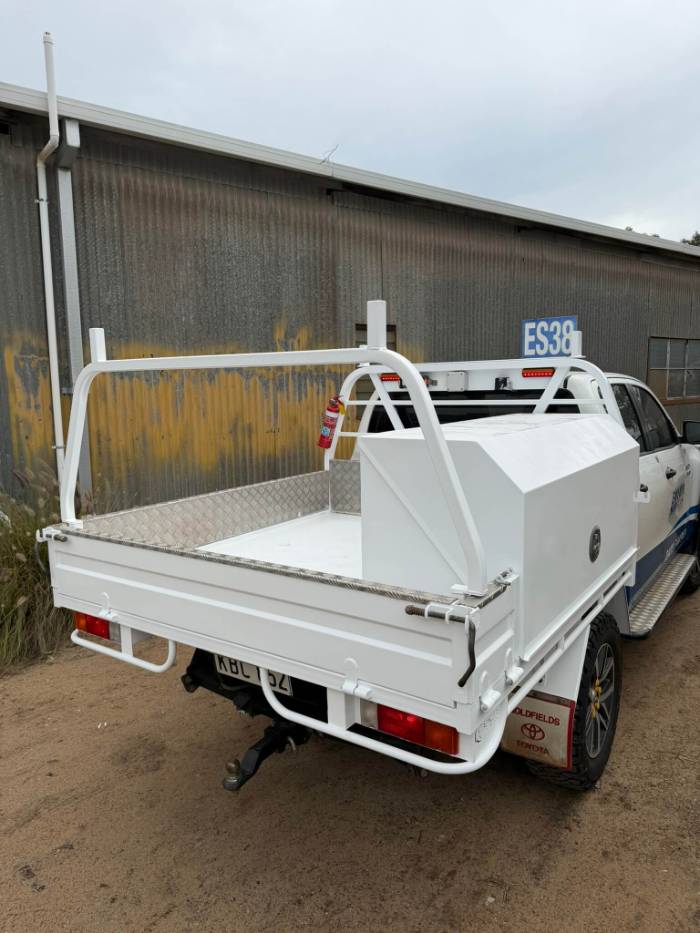
Real work from around Perth and regional WA. Every photo on this page is one of ours.

Where we do this work
Mobile across the Perth metro at our standard rate, regional WA in batched trips. See before and after photos of this work.
Common questions
Transport sandblasting — your questions answered
Can you work at our depot?
Yes, that is how most fleet work runs. The rig is self-contained — water, media, power and containment on board — so we set up in your yard without drawing on your services.
How long is a unit off the road?
That depends on the unit and how much of the old system has failed. We scope it with you first and give you a window per vehicle so you can plan the run around it.
Can you keep some decals and strip the rest?
Yes. Anything you want kept gets masked before we start — we agree that on the walk-around so there are no surprises.
How long will my truck or trailer be off the road?
That depends on scope and on your painter, not on the blasting alone. The useful thing to know is that blasting and coating have to be sequenced tightly — bare steel cannot sit — so book them together rather than separately.
Can you blast a tanker barrel?
Externally, yes, subject to what it has carried. Anything that has held fuel or chemical must be purged and certified gas-free before work begins, and we will need that documentation.
Can you do a whole fleet?
Yes, in batches. Running units through a few at a time keeps the rest of the fleet earning, and it lets us keep the same preparation and coating spec across every unit.
Component by approach
One unit, several different jobs happening at once.
| Component | Approach | Masked or removed first |
|---|---|---|
| Chassis and cross members | Hard cut, deeper profile | Air lines, brake components, seals, slack adjusters |
| Tray sides and body panels | Lower pressure, more standoff | Lights, decals to be kept, glass and rubbers |
| Alloy trays and tanker barrels | Soda or fine media | Fittings, valves, gauges and data plates |
| Wheels and rims | Fine media, low pressure | Valve stems, bearing faces |
Related services and areas
Automotive sandblasting
Panels, chassis and shells stripped without warping the steel.
Graffiti removal
Tags off rolling stock, masonry and steel without ghosting.
Sandblasting Perth
Coverage, travel and access across the Perth metro area.
Last updated 20 August 2026