
Marine sandblasting · Perth & WA
Marine Sandblasting Perth & WA
Anti-foul, rust and failed primer stripped from hulls, keels, running gear and navigation gear — on the hardstand or in your own yard.
In short
We strip anti-foul and failed coatings back to a sound substrate without gouging plate or bruising gelcoat. Because the media is wet, the yard next to you keeps working and the spent abrasive stays on your tarp instead of blowing across the hardstand.
What comes off
Layered anti-foul, boot-top, tie coats, epoxy primer, marine growth and the rust underneath it. Wet media lifts the lot back to a sound substrate and leaves the profile your coating system specifies.
Steel, aluminium, timber and GRP each take a different media and a different pressure — see soda blasting aluminium and fibreglass. We match both to the hull rather than running one setup across everything.

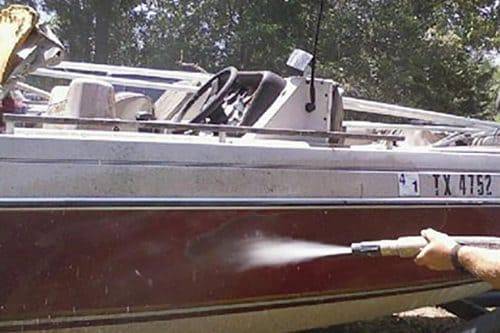
Anti-foul, and what sits under it
Most hulls carry more history than the owner expects: several generations of anti-foul, a tie coat that never bonded, patches of epoxy and blistering where water found a way in. Blasting is the only honest way to see the plate.
On steel we go to bare metal at the profile your paint system asks for. On aluminium and GRP we back the pressure off and change media so the substrate is cleaned, not cut.
Working on a hardstand
Yards care about two things: overspray and mess. Wet blasting produces no dust plume, so neighbouring vessels are not showered in abrasive and the yard rarely needs to stop work around us. Spent media is contained, collected and removed.
We work to your slot. If the vessel is out of the water on a booked lift, tell us the window and we will sequence the passes to hit it.
Coating window
Bare steel in a coastal yard flash rusts fast. We rinse, apply an inhibitor and hand over clean plate so your painter can go straight to primer. If the painter is a day behind, say so before we start and we will plan around it.
Hull material decides the media
Steel hulls
Antifoul, failed primer and mill scale come off together, and what is underneath is usually pitting rather than clean plate. Steel takes a garnet cut to a defined profile so the epoxy system has something to key into. Bare steel on a hardstand flash rusts fast in coastal air — inhibitor goes on at handover and the first coat wants to follow quickly. Flash rust, explained covers the window.
Aluminium hulls
Alloy is soft and it work-hardens. Hard abrasive at pressure will dish plate between frames and embed particles that set up galvanic problems under the coating. We run soda or a fine media at low pressure on alloy, and we keep the nozzle moving across frames rather than dwelling in the bays.
Fibreglass and gelcoat
GRP is the most cautious job on the water. Soda removes antifoul without cutting the gelcoat, so the laminate keeps its water barrier. This is also where blistering shows itself — once the antifoul is off, osmosis is visible, and that is a conversation to have with your shipwright before anything is coated.
On the hardstand
Yard work runs to the yard's rules: containment under the hull, wash water captured rather than run to the drain, and a booking window you do not get to overrun. We set up and strip down inside the slot you have paid for.
How the job runs
Site look
Hardstand access, water supply, containment and the coating spec your painter is working to.
Mask and contain
Tarps under the hull, fittings, anodes, shafts, transducers and topsides protected.
Blast
Media and pressure matched to steel, alloy, timber or GRP — profile to your paint system.
Wash and hand over
Rinse, inhibitor on bare steel, handover photos of the plate and any pitting found.
Recent jobs
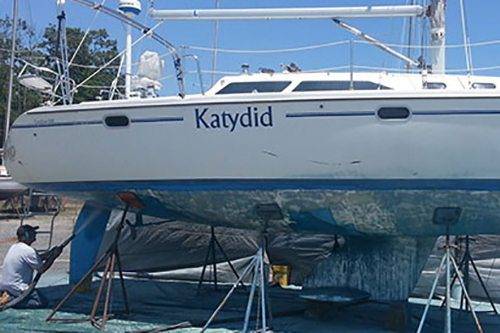
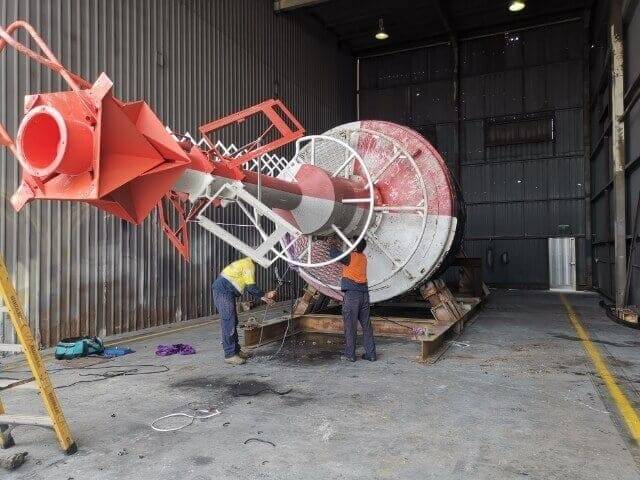
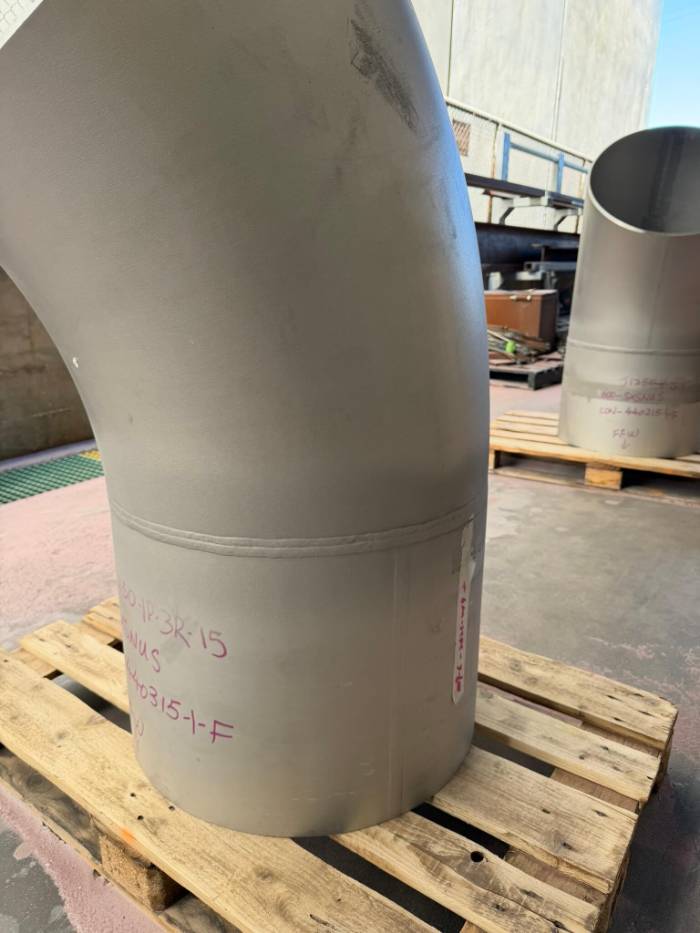
Real work from around Perth and regional WA. Every photo on this page is one of ours.
Where we do this work
Mobile across the Perth metro at our standard rate, regional WA in batched trips. See before and after photos of this work.
Common questions
Marine sandblasting — your questions answered
Can you blast aluminium and GRP hulls?
Yes. We change media and drop the pressure so the substrate is cleaned rather than cut. Alloy and gelcoat both need a softer setup than steel, and running one pressure across every hull is how yards end up with damage.
Will the yard have to stop work around us?
Rarely. Wet blasting throws no dust plume, so vessels either side are not showered in abrasive. We tarp underneath and remove the spent media when we finish.
Do you travel outside Perth for marine work?
Yes. The rig is self-contained and travels to regional yards and private hardstands across WA — Bunbury, Geraldton, Exmouth and further on request.
Can you blast a fibreglass hull without damaging the gelcoat?
Yes. Soda blasting removes antifoul and paint without cutting into gelcoat, because the media breaks down on impact rather than gouging. It is the standard approach for GRP and it is why we carry soda as well as garnet.
Does the boat need to be out of the water?
Yes. All hull work is done on the hardstand or in a yard, with containment underneath so spent media and paint are captured rather than washed into the water.
How soon can antifoul go back on after blasting?
On steel, the primer coat wants to go on the same day — bare steel in coastal air starts flash rusting within hours. On alloy and GRP there is more latitude, but the surface still needs to be clean and dry when the first coat goes down.
Media by hull material
A quick reference for what suits what. The right answer on a steel hull is the wrong answer on gelcoat.
| Hull | Typical media | Pressure | Watch for |
|---|---|---|---|
| Steel | Garnet | Standard | Pitting under old antifoul; flash rust once bare |
| Aluminium | Soda or fine media | Low | Dishing between frames; embedded particles causing galvanic corrosion |
| Fibreglass / GRP | Soda | Low | Cutting gelcoat; blistering revealed once antifoul is off |
| Running gear and props | Fine media | Low to standard | Machined faces, seals and bearings need masking |
Related services and areas
Fixed & mobile plant
Cranes, conveyors, structures and pipework prepped in place.
Manufacturing sandblasting
Fabricated steel, plate and pipe spools blasted to profile and primed.
Sandblasting Perth
Coverage, travel and access across the Perth metro area.
Last updated 20 August 2026