
Concrete Exposure sandblasting · Perth & WA
Concrete Exposure Sandblasting Perth
Driveways, patios and feature slabs opened up to a controlled exposed-aggregate finish — light, medium or deep.
In short
Exposure depth is a choice, not a lottery. We blast a test panel at two or three depths, you pick the one you want, and we run that setting across the slab so the finish is consistent from edge to edge.
What we do
Blasting removes the cement paste at the surface to reveal the aggregate underneath. Unlike a chemical etch or a polish, the depth is controlled by pressure and dwell, so the same slab can be taken from a light sand finish to a deep, fully-exposed stone.
It also works on slabs that have already cured, which is what makes it useful on existing driveways and patios rather than only on fresh pours.
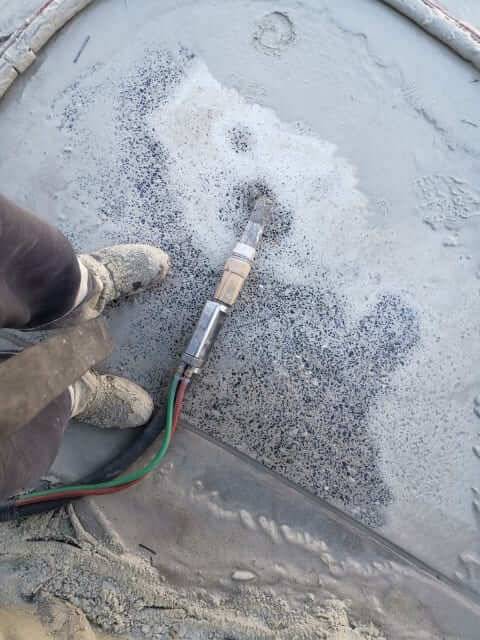
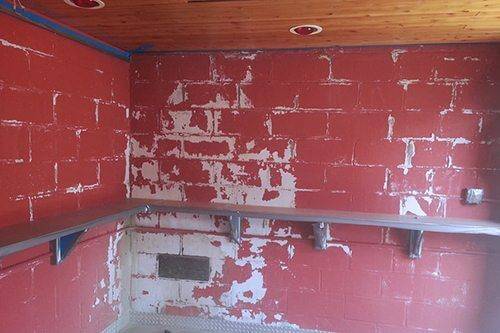
Light, medium and deep
A light exposure just knocks the paste off the very top and gives a fine, sandy texture with the aggregate hinted at. Medium opens the stone properly and is the most common choice for driveways. Deep exposure takes the paste back until the aggregate stands proud, which suits feature panels and high-grip areas.
Because the depth is set by pressure and dwell rather than chemistry, the finish is repeatable across the whole slab.
Existing slabs
Old driveways and patios can be exposed years after the pour. The same process removes paint, sealer and surface staining first, so a tired slab can be turned into a feature rather than replaced.
Where a slab is spalling or cracked we will tell you what blasting can and cannot fix before we quote it.
Grip, and what happens after
An exposed surface has more texture and more grip than a trowelled one, which matters on a sloped driveway or a pool surround. Once exposed, the slab should be sealed to keep the paste from staining — your concreter or a sealing contractor can take it from there.
Exposure depth is a decision, not an accident
Light, medium and deep exposure
A light etch removes the cement skin and leaves a fine sandy texture. A medium exposure takes the surface down until the aggregate is clearly visible and proud. A deep exposure keeps going until the stone dominates the finish. All three come from the same equipment — the difference is pressure, media and how many passes, which is why an agreed sample panel matters more than a description.
The mix decides the look
The aggregate in the slab is what you will see, and you cannot change it after the pour. A mix with rounded river pebble reads completely differently to crushed granite, and the sand colour behind it sets the tone. On new work, ask the supplier what is in the mix before the slab goes down.
Green concrete versus cured slabs
Timing changes everything. A slab that is a few days old exposes easily and evenly. A slab that has cured for years is hard all the way through and takes considerably more work for the same depth — achievable, but a different job and a different price.
Consistency and edges
The failure mode on exposed aggregate is unevenness — deeper in the middle of a pass, shallow at the overlaps, and edges that do not match the field. Keeping the nozzle moving at a constant rate and standoff is what produces a slab that reads as one surface. Wet blasting also keeps the dust down, which matters on a residential driveway with neighbours either side.
How the job runs
Test panels
Two or three depths blasted on a discreet section so you can choose the finish.
Mask and protect
Walls, garden beds, drainage and adjacent paving covered before work starts.
Blast to depth
The chosen setting run consistently across the slab, edge to edge.
Wash and clear
Slab rinsed, spent media collected, surface left ready for sealing.
Recent jobs
Real work from around Perth and regional WA. Every photo on this page is one of ours.
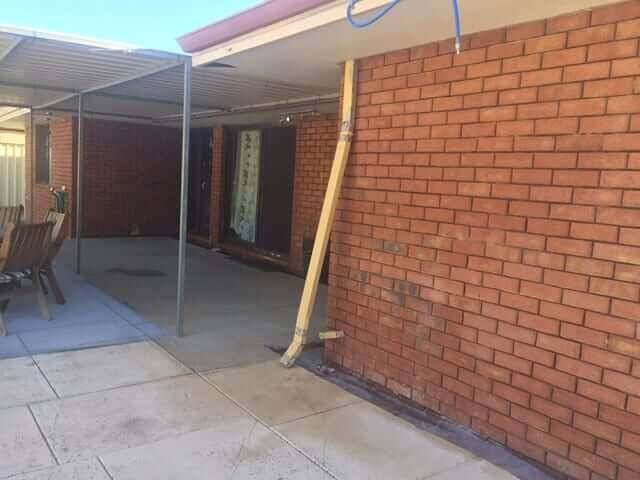
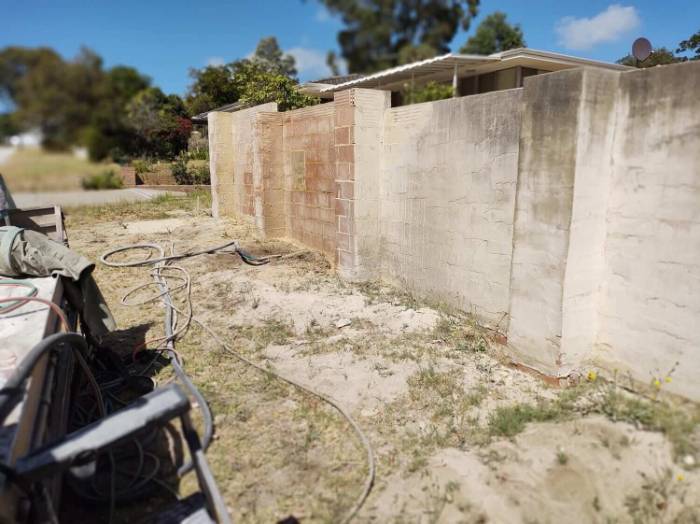

Where we do this work
Mobile across the Perth metro at our standard rate, regional WA in batched trips. See before and after photos of this work.
Common questions
Concrete Exposure sandblasting — your questions answered
Can you expose an existing driveway?
Yes. Cured slabs expose just as well as fresh ones, and we can remove paint, sealer and staining in the same job. It is often a cheaper result than replacing a tired driveway.
How do I choose the depth?
We blast two or three test panels on a discreet section of the slab, you look at them in daylight and pick one. That setting then runs across the whole area.
Does it need sealing afterwards?
Yes, we recommend it. An exposed surface is more open than a trowelled one, so a sealer keeps oil and staining out. Where a surface only needs cleaning rather than profiling, compare sandblasting vs pressure washing. We hand the slab over clean and ready for your sealing contractor.
Can you expose an old concrete driveway, or only new pours?
Both. Fully cured concrete is harder and takes longer, so an older slab costs more to expose to the same depth than a green one — but it is entirely achievable.
How deep can the aggregate be exposed?
From a light etch that just removes the cement skin, through to a deep exposure where the stone dominates. We agree the depth on a sample area first, because the same words mean different things to different people.
Will the finish be even across the whole slab?
That is what the technique is for — constant standoff, constant speed and controlled overlaps. Variation in the pour itself can still show through, which is another reason to do a test area first.
Exposure depth, in plain terms
Agree the depth on a sample area before the main pour is touched — the words below mean different things to different people.
| Depth | What you see | Common use |
|---|---|---|
| Light etch | Cement skin removed, fine sandy texture | Slip resistance without changing the look much |
| Medium | Aggregate clearly visible and slightly proud | Driveways, patios, the most common request |
| Deep | Stone dominates the surface | Feature slabs and entries where the aggregate is the point |
Related services and areas
Construction sandblasting
Brick, concrete, render and timber stripped back on site.
Line marking removal
Bays, arrows and road lines off asphalt and concrete.
Sandblasting Perth
Coverage, travel and access across the Perth metro area.
Last updated 20 August 2026