
Comparison
Sandblasting vs Pressure Washing
A pressure washer cleans a surface. Blasting removes what is bonded to it. Confusing the two is how brickwork and decking get wrecked.
The short answer
Pressure washing removes what is sitting on a surface — dirt, film, loose material. Sandblasting removes what is bonded to it — paint, render, rust, scale, anti-foul — and leaves a profile for coating. If a coating has to come off, or a new coating has to go on, washing is not the tool.
What each one actually does
A pressure washer uses water velocity alone. It is excellent at lifting dirt, algae, cobwebs and chalked residue, and it is cheap and fast. What it cannot do is break the bond between a sound coating and the substrate.
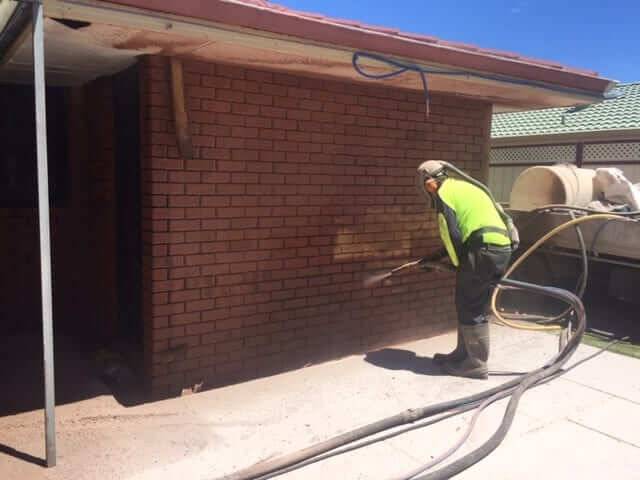
Blasting adds abrasive to the equation. Now the impact is mechanical, so paint, filler, render, rust and marine growth come away — and the surface is left with texture a new coating can key into.
The damage most people do not expect
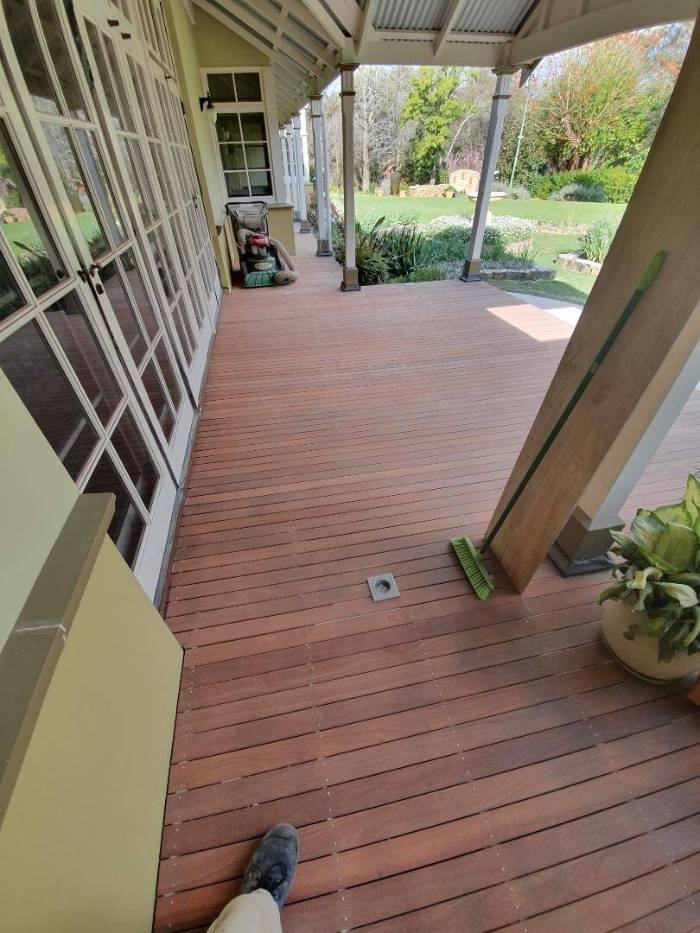
On timber, a pressure washer at working pressure tears out the soft summer growth between the grain lines and leaves the deck furry. It looks clean while wet and rough forever afterwards. Wet abrasive blasting lifts coating and grey without shredding the grain.
On brick and render, high-pressure water drives moisture deep into the wall and blows out weak mortar joints, while leaving the paint largely where it was. On painted brick, washing is essentially the wrong process.
When washing is the right call
Where the coating is sound and only needs cleaning before recoating. Where the surface is dirty rather than coated. Where the substrate cannot take abrasive at all and there is no coating to remove.
We often wash as part of a blasting job anyway — a rinse-down after blasting is standard, and on marine work a wash removes salt before the abrasive goes anywhere near the hull.
| Sandblasting | Pressure washing | |
|---|---|---|
| Removes dirt and film | Yes | Yes |
| Removes bonded paint | Yes | No |
| Removes rust and scale | Yes | No |
| Removes render and texture coat | Yes | No |
| Creates anchor profile | Yes | No |
| Risk to timber | Low at correct setting | Raises and shreds grain |
| Risk to brick and mortar | Low at correct setting | Drives water in, blows joints |
| Water used | Low (wet setup) | High |
| Best for | Prep before coating | Cleaning sound surfaces |
Common questions
Sandblasting vs pressure washing — your questions answered
Can a pressure washer remove paint?
Only paint that has already failed and is lifting. Sound paint stays on, and turning the pressure up to force it off is what damages timber, mortar and render. Removing a bonded coating is a blasting job.
Will blasting damage my deck?
Not at the right setting. Wet abrasive blasting lifts coating and weathered grey while leaving the grain intact, which is the opposite of what a pressure washer does to timber.
Do I need to wash before blasting?
Sometimes — salt on marine work, heavy grease or mud on plant. We handle that as part of the job rather than asking you to prepare the surface first.
Is blasting a lot more expensive?
Per square metre, yes, because it does far more. The comparison that matters is against the cost of the coating failing early because the surface was only washed.
Written from our own jobs across Perth and WA · Last updated 20 August 2026