Sandblasting explained
What Is Sandblasting?
The common name for abrasive blasting — and in practice, almost never done with sand. Here is what the term actually covers, and what it means for your job.
The short answer
Sandblasting is the everyday name for abrasive blasting: abrasive media fired at a surface under compressed air to strip coatings, rust, scale and contamination, leaving a clean profile for the next coat. The name is historical — modern operators in WA run garnet, soda, glass or slag rather than beach or river sand.
What sandblasting actually is
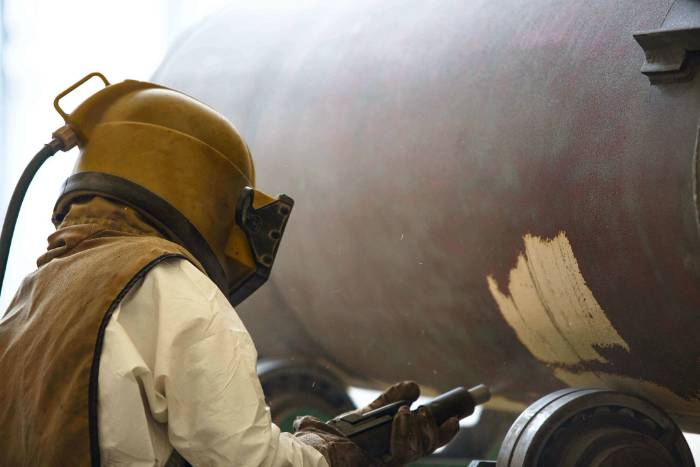
A compressor supplies air, a pot meters abrasive into the air stream, and a nozzle accelerates the mix at the surface. Each particle removes a tiny amount of coating and substrate on impact. Repeat that a few million times a minute and paint, rust and scale come off.
What is left is not just a clean surface but a textured one — an anchor profile. That texture is why blasting is specified before coating: paint bonds mechanically to profile, and a smooth or contaminated surface is what causes coatings to peel in sheets a year later.
Why nobody uses sand any more
The word stuck, but the media moved on. We run garnet as the default: it cuts fast, it is naturally silica-free, and it can be graded fine or coarse for the substrate in front of us. Soda for delicate work, glass for finish-sensitive surfaces, and heavier abrasives for mill scale on structural steel.
If someone quotes you a job and cannot tell you which media they intend to use, that is worth asking about — the media decides the finish as much as the pressure does.
What sandblasting removes
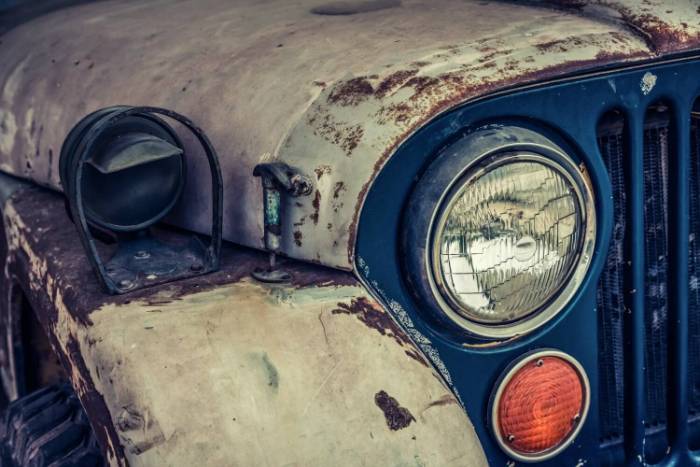
Two-pack and enamel paint, primer, powder coat, filler, anti-foul, underseal, mill scale, weld spatter, rust and pitting oxide, carbon, soot, line marking, graffiti, adhesive, cement render, sealer and marine growth. On timber it strips coating and grey without shredding the grain.
What it will not do is fix metal. Blasting removes what is on top and shows you the truth underneath — thin plate, cracked welds, filler over rust and previous repairs. That is a feature, not a fault.
Sandblasting, dustless blasting and wet blasting
They are not competing technologies so much as different setups of the same idea. Traditional dry sandblasting fires abrasive dry, which is fast and aggressive but throws a plume. Dustless blasting injects water into the stream so the fines drop at your feet and the surface stays cool. Wet versus dry covers the trade-offs in detail.
We carry both, which means the job picks the method rather than the method picking the job.
Mobile or in the workshop
Most of our sandblasting happens where the item already is: a driveway, a farm hardstand, a boatyard, a depot or a live plant. The rig carries its own air, water, abrasive and containment. Smaller components, batch work and anything needing coating afterwards usually come to the workshop instead.
See the full list of sandblasting services for what we take on by industry.
Common questions
Sandblasting — your questions answered
Is sandblasting done with actual sand?
Rarely, and not by us. Garnet is the standard abrasive in WA because it cuts fast, grades well and is naturally silica-free. We also run soda and glass where the substrate calls for something softer.
What is the difference between sandblasting and dustless blasting?
Dustless blasting is sandblasting with water injected into the abrasive stream. The abrasive still cuts, but the fines drop at your feet instead of forming an airborne plume, and the surface stays cool so thin panel does not warp.
Will sandblasting damage my surface?
Not at the right pressure and media for the substrate. Damage comes from running one aggressive setup across everything. On soft brick, limestone, timber, alloy and gelcoat we drop pressure and change media, and we test on a hidden section first.
Can you sandblast at my house or workplace?
Yes. The rig is fully mobile and self-contained across Perth and regional WA, so a driveway, shed, yard or hardstand is enough. We contain and collect the spent abrasive when we finish.
What does sandblasting cost in WA?
It depends on square metres, how many coatings are on the surface, access, containment and the standard required. Our guide to what blasting costs in WA covers the drivers, and quotes are free inside the Perth metro.
Keep reading
Mobile sandblasting Perth
The rig comes to you — air, water, abrasive and containment on board.
Sandblasting vs pressure washing
What each one actually removes, and the damage people do not expect.
What blasting costs in WA
The seven things that move a blasting quote up or down.
Written from our own jobs across Perth and WA · Last updated 20 August 2026