
Comparison
Dustless Blasting vs Sandblasting
Same abrasive, same pressure, one difference — water at the nozzle. Here is what that actually changes on your job.
The short answer
Dustless blasting is sandblasting with water injected into the abrasive stream. The cutting power is comparable; the difference is that there is no airborne dust plume and the surface stays cool. That makes it viable on occupied sites and thin panel, where traditional dry sandblasting is not.
What stays the same
The abrasive is the same — usually garnet. The compressor, the pot and the nozzle are the same. The coating, rust and scale come off the same way, by mechanical impact, and the surface is left with an anchor profile in both cases.
Anyone telling you dustless blasting is a gentler process is selling something. It is a differently contained process.
What the water changes
The plume disappears. Fines are wetted on impact and drop at the work face instead of drifting across a yard, a street or a boatyard. That is what lets us work next to occupied buildings and other trades.
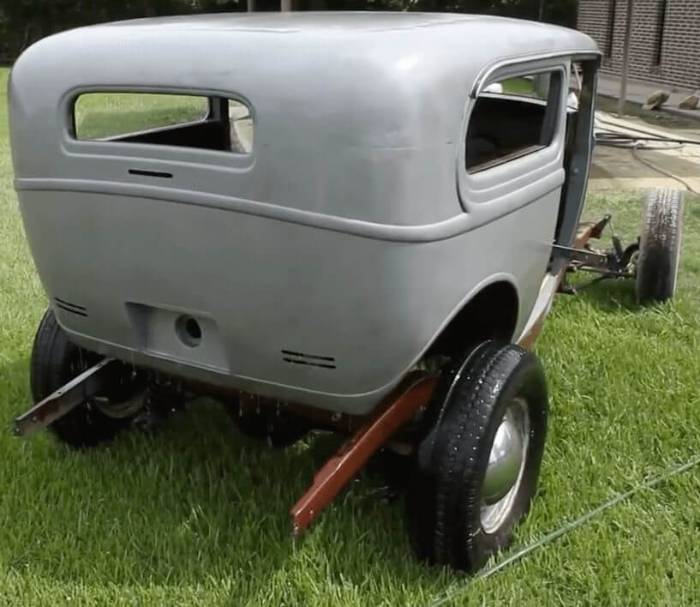
The surface stays cool. Heat is what expands and buckles thin panel. Remove the heat and you remove the warping risk that makes people nervous about blasting a car.
Clean-up changes shape. Wet media is a pile to sweep and collect, not a dust layer settling over everything within twenty metres.

What dry sandblasting still does better
Heavy mill scale, thick industrial coatings and tank interiors are faster dry. Coating systems that will not accept a wetted surface rule wet out entirely. And where there is no flash-rust window to manage, dry keeps the sequence simpler.
The honest summary: dry is the production tool, wet is the tool that can work where dry cannot. The full comparison is here.
| Dustless blasting | Dry sandblasting | |
|---|---|---|
| Airborne dust | None at the work face | Plume; containment required |
| Cutting power | Comparable | Comparable to slightly faster |
| Thin panel and alloy | No warping | Warping risk from heat |
| Occupied and shared sites | Workable | Area usually cleared |
| Masonry and timber | Suits it at low pressure | Easy to over-cut |
| Mill scale, heavy coatings | Capable | Faster |
| Tank interiors | Water complicates it | Preferred |
| Flash rust | Managed with inhibitor | Not applicable |
| Clean-up | Swept and collected | Fines settle widely |
Common questions
Dustless vs sandblasting — your questions answered
Is dustless blasting less powerful than sandblasting?
No. The same abrasive at the same pressure does the same cutting. The water changes where the dust goes and how hot the surface gets, not how well the abrasive works.
Which one should I use on a car?
Wet, essentially always. Dry blasting puts heat into thin panel and heat is what causes oil-canning, which cannot be undone.
Which is better for structural steel?
Dry is usually faster on mill scale and heavy coatings. If the steel is in a live or occupied area, wet is what makes the job possible at all.
Does dustless blasting cost more?
Not inherently. What changes cost is containment, access and the standard required — and on sensitive sites, wet blasting often reduces the containment cost rather than adding to it.
Written from our own jobs across Perth and WA · Last updated 20 August 2026