Paint removal
Paint Removal Perth
Paint off steel, brick, limestone, concrete, timber and alloy — without chemical strippers, endless sanding or heat guns.
The short answer
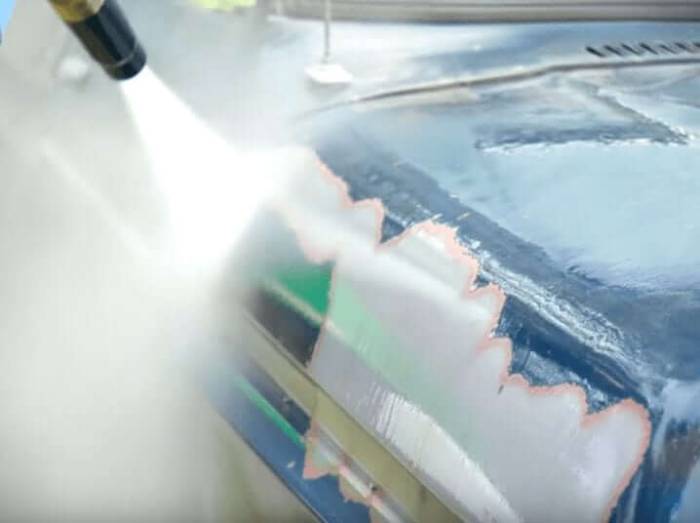
Abrasive blasting is the fastest and most complete way to remove paint, and the only method that also leaves a surface ready to recoat. Chemical strippers need neutralising and often leave residue in the substrate; sanding glazes and clogs; heat guns scorch. Blasting removes every coat in one process.
What we can strip paint from
Steel — chassis, panels, structural members, gates, trailers, machinery. Masonry — painted brick, limestone, render, texture coat, concrete. Timber — weatherboards, decking, joinery, beams, furniture. Alloy and gelcoat, where soda replaces the cutting abrasive.
Multiple coats are not a problem and often not even slower. Layered enamel, primer, filler and lead-era coatings all come off together rather than one at a time.
Why not chemicals or sanding
Chemical strippers work, slowly, and then have to be neutralised and disposed of. On porous masonry and open-grain timber the residue stays in the substrate and interferes with the next coating.
Sanding is fine on flat, accessible panel and hopeless everywhere else: it cannot follow profile, it clogs immediately on soft coatings, and it burnishes rather than removes on hard ones. Neither method gives you a keyed surface across a whole elevation the way blasting does.
What paint removal exposes
Once the coating is gone, so is its cover: filler over rust, patched panels, previous repairs, cracked welds, spalled concrete, mortar that has gone to sand. That is the point of stripping rather than recoating over the top — you get to make decisions with the surface visible.
Where we uncover something significant, we stop and call before continuing.
Straight into coating
Bare steel needs to be coated promptly, so we rinse and apply a flash-rust inhibitor at handover and sequence the blast around your painter’s date. Masonry and timber are more forgiving but still want coating while clean.
We can also handle the coating ourselves — blasting, repairs and protective coatings in one run, rather than handing off mid-project.
Common questions
Paint removal — your questions answered
Can you remove paint without damaging the surface?
Yes, at the correct pressure and media for the substrate. On brick, limestone, timber and alloy we test a hidden section first and get your sign-off before running the whole area.
Can you remove paint from brick?
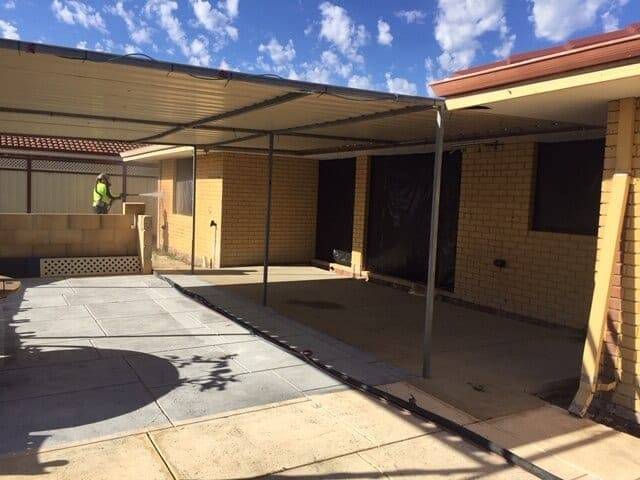
Yes — painted brick is one of our most common jobs. Original face brick under a couple of coats usually comes back very well; brick that has been rendered and patched will come back honest, including the patches.
Is blasting better than chemical paint stripper?
For anything beyond a small area, yes. Blasting takes every coat in one process and leaves a keyed surface, where chemicals need neutralising and can leave residue in porous substrates that affects the next coating.
How soon can it be painted afterwards?
Bare steel should be coated the same day; we apply an inhibitor at handover which holds it overnight. Masonry and timber allow more time but are best coated while still clean.
Can you remove lead-based paint?
Yes, with contained collection and disposal of the spent media and coating. Tell us if lead is suspected at quote stage so containment is planned properly.
Written from our own jobs across Perth and WA · Last updated 20 August 2026