Mobile & workshop · Perth & regional WA
Sandblasting, Abrasive Blasting & Dustless Blasting
Mobile and workshop surface preparation and protective coatings across Perth and Western Australia — agriculture, transport, plant, mining, marine, construction, automotive and manufacturing.
View every industry we service
- Coverage
- Perth & regional WA
- Setup
- Mobile rig or workshop
- Compliance
- Fully insured
What we do
Sandblasting, abrasive blasting, dustless and soda blasting across Perth and Western Australia — mobile at your site or in our workshop, with the protective coatings that follow.
We carry wet and dry setups, so the substrate decides the method rather than the other way around. Mechanically qualified as well, which means components can be removed, repaired or replaced around the blast, then primed and coated inside the coating window rather than days later.
- 01SandblastingThe everyday term — what it covers and which media are actually used→
- 02Abrasive blastingThe four setups, and the cleanliness and profile your coating spec asks for→
- 03Dustless blastingWet media — no plume, no heat, no warped panel→
- 04Soda blastingStrips coatings without cutting alloy, gelcoat, chrome or timber→
- 05Wet vs dry blastingThe decision behind every quote we write→
Methods
Four setups on one rig. Most operators own one and quote every job as though it suits — these five guides explain the differences in plain terms, including when we would tell you the opposite of what we sell.
Industries
What industries do we blast for?
Eight industries, wet or dry, on your site or in our workshop. Each one has its own page with the work, the process and the questions we get asked most.
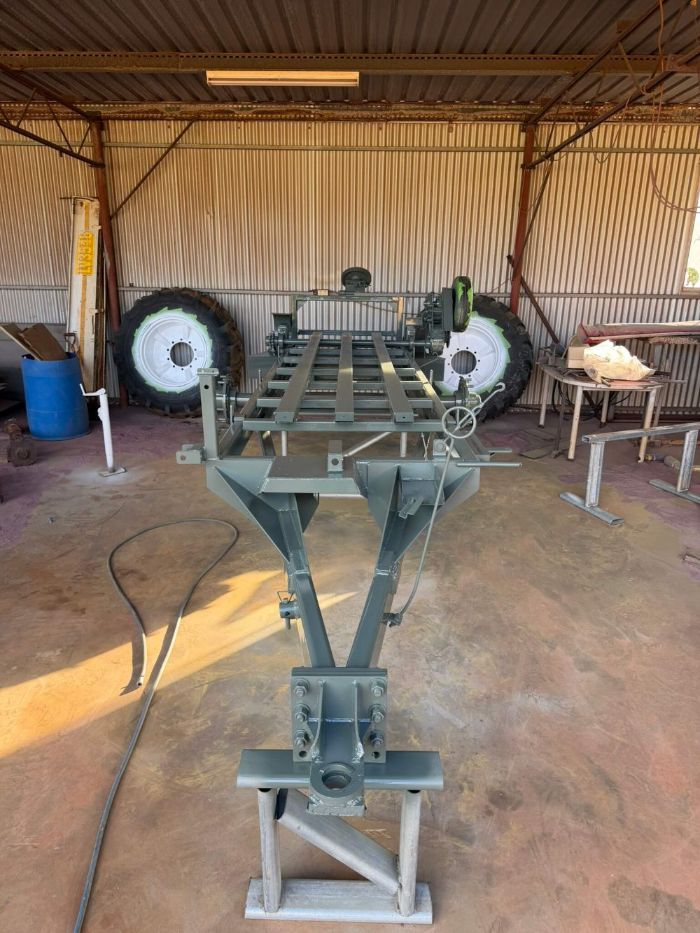 AgricultureTanks, silos, headers, trailers
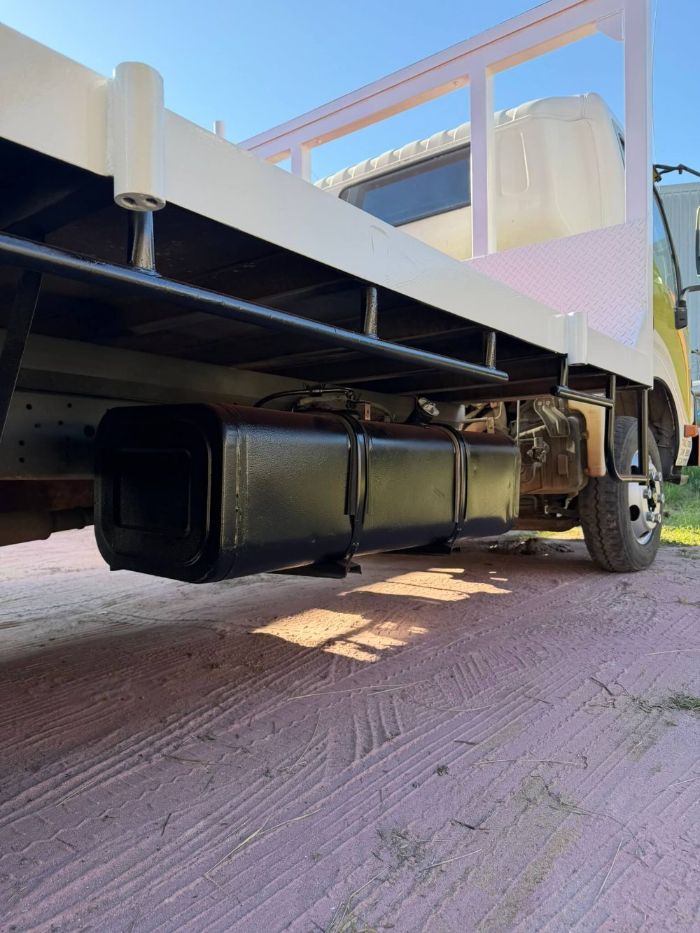 TransportTrucks, rail, ute trays, trailers
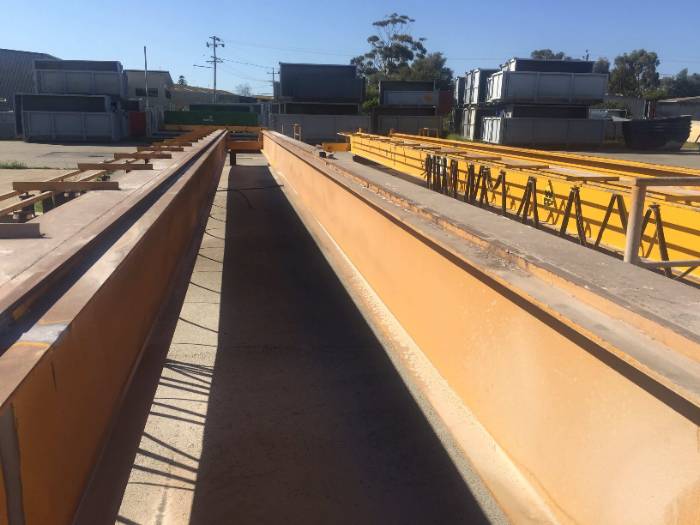 Fixed & mobile plantCranes, conveyors, structures
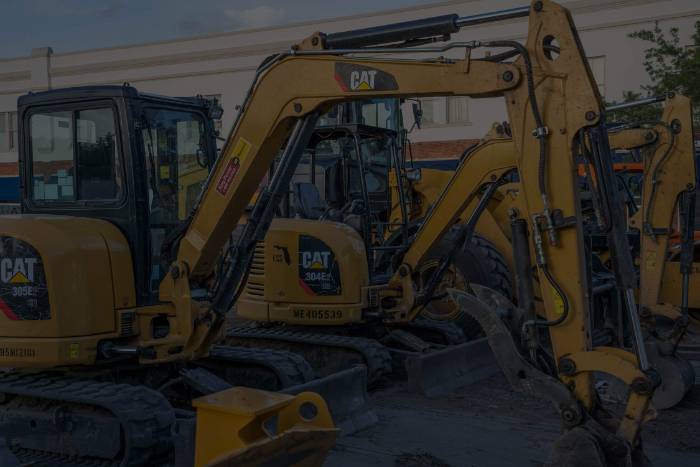 Mining equipmentBuckets, undercarriage, plant
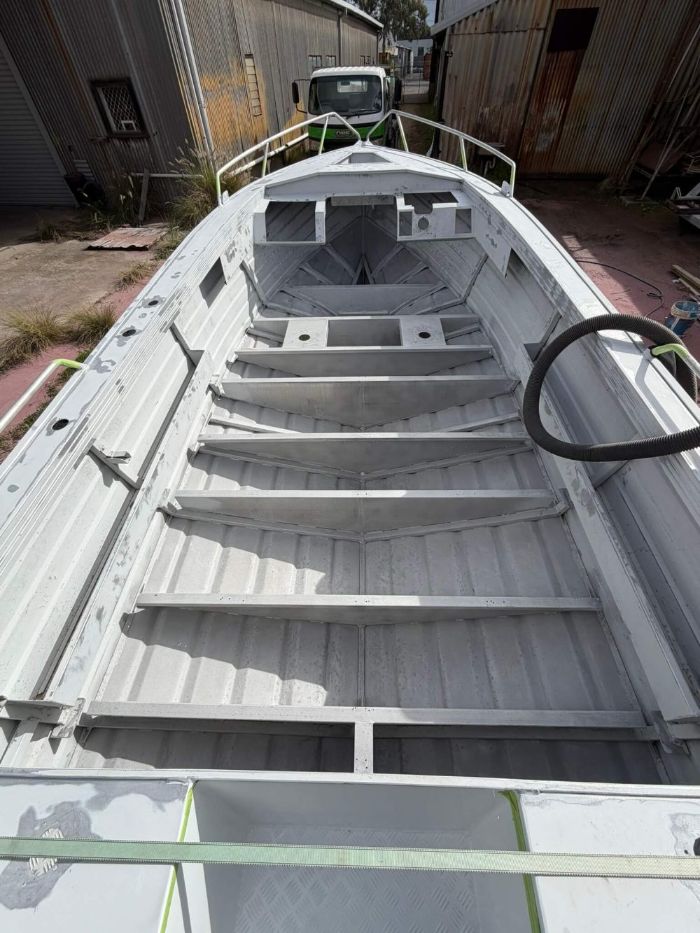 MarineHulls, anti-foul, running gear
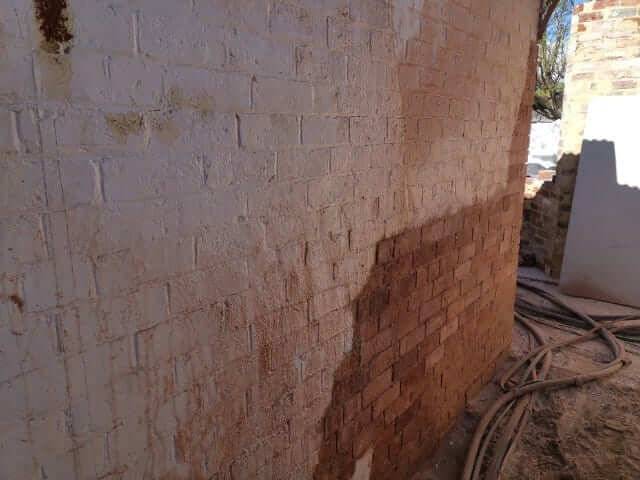 ConstructionBrick, limestone, concrete, timber
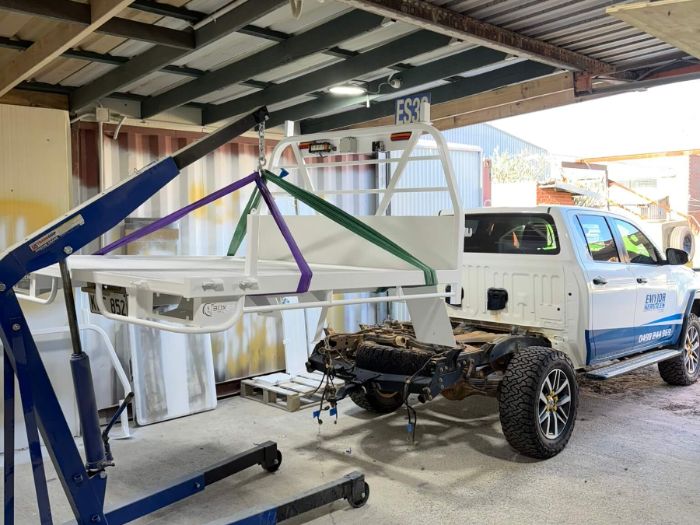 AutomotivePanels, chassis, shells, wheels
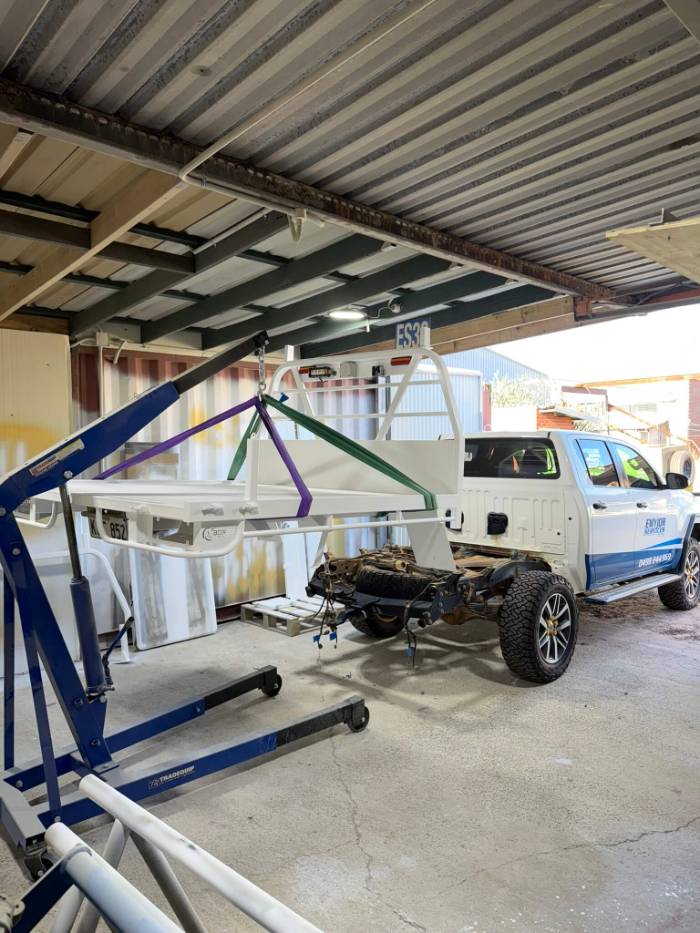 ManufacturingFabricated steel, pipe spools
Specialist jobs
What else do we get called in for?
Four jobs people ask for by name rather than by industry.
01
Line marking removal
Thermoplastic and painted bays, arrows and crossings off asphalt and concrete — without the grinder scar that reads as a ghost line forever.
Line marking removal →02
Graffiti removal
Tags off brick, limestone, render, concrete and steel without the shadow chemical removal leaves in porous masonry.
Graffiti removal →03
Fire damage & cleanup
Soot and char off structural steel, brick and concrete so an engineer can assess the structure and the make-good can start.
Fire damage & cleanup →04
Concrete exposure
Driveways, patios and feature slabs opened to a light, medium or deep exposed-aggregate finish you choose off a test panel.
Concrete exposure →Method
Wet or dry blasting — which does your job need?
Neither is better in the abstract. The substrate and the site decide, which is why we carry both rather than selling the one setup we own.
Water in the stream
Wet blasting
- DustNone at the work face — fines drop where they fall
- HeatSurface stays cool, so thin panel and alloy do not warp
- SubstratesPanels, hulls, brick, limestone, timber, render
- SitesOccupied houses, boatyards, live plant, suburban streets
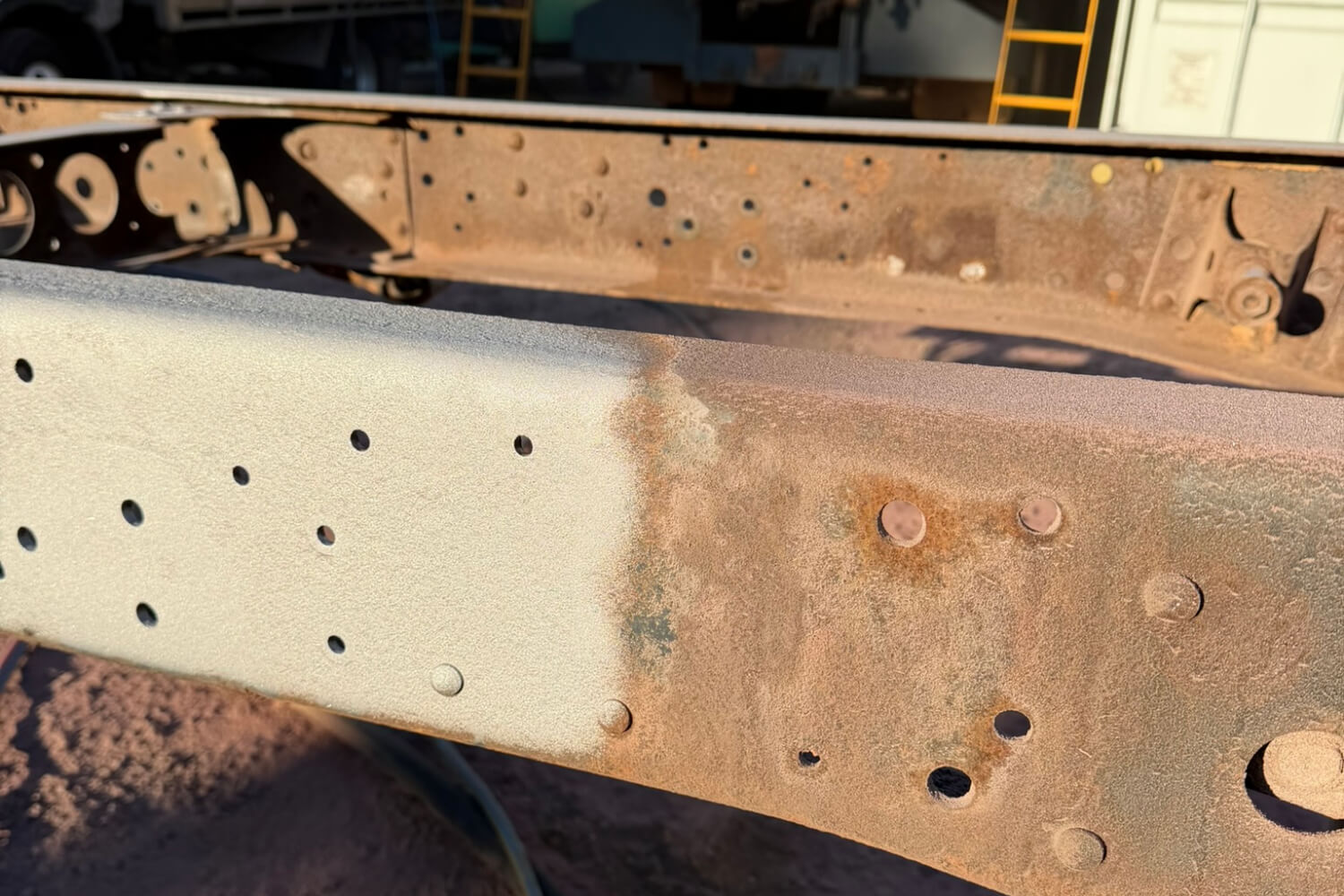
- AfterFlash-rust inhibitor applied, coating follows next morning
Abrasive only
Dry blasting
- SpeedFaster and more aggressive on heavy coatings
- ScaleMill scale, thick two-pack, structural steel by the tonne
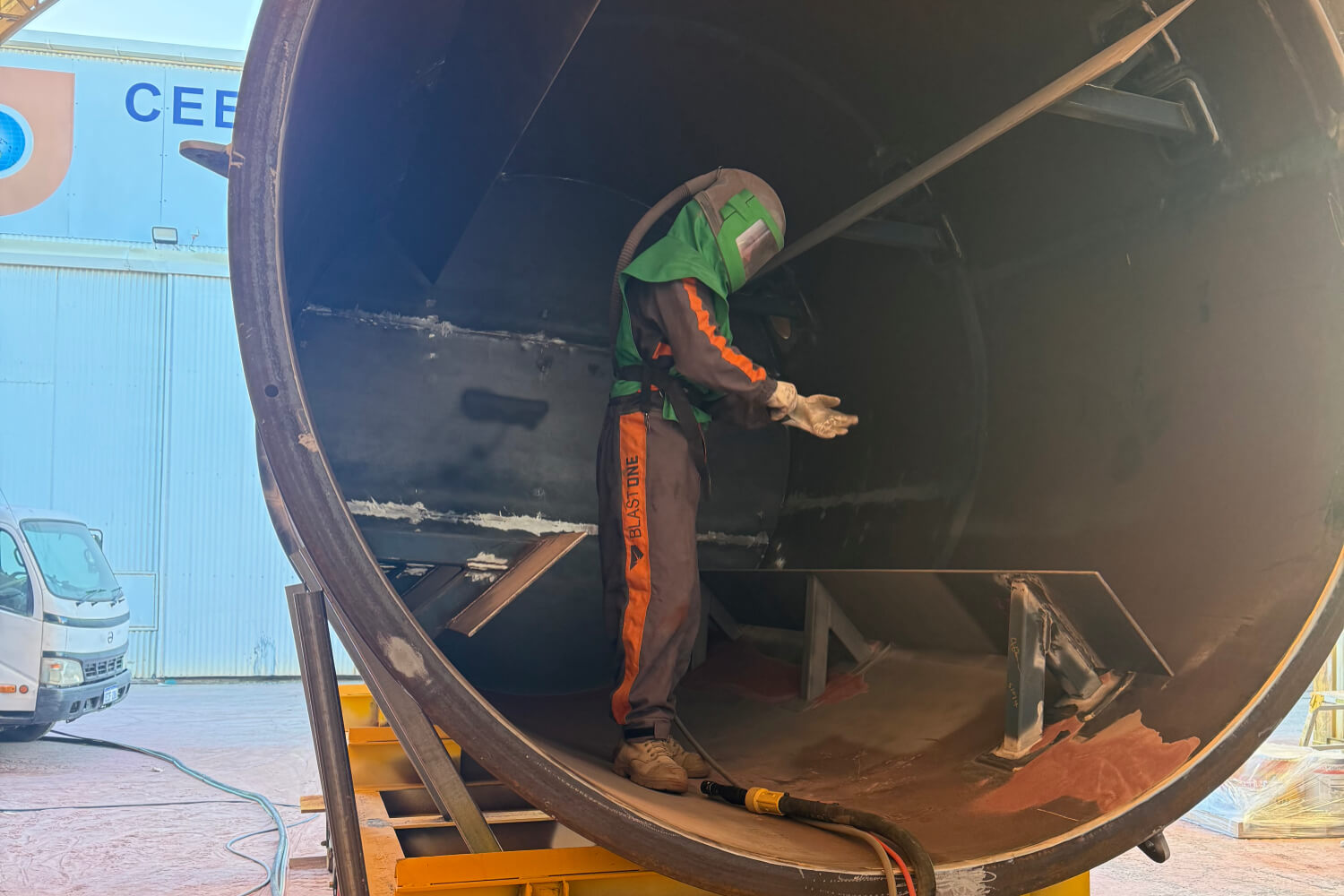
- InteriorsTanks and vessels where water creates more problems
- SpecsSystems that will not accept a wetted substrate
- AfterStraight into primer — no flash-rust window to manage
Process
How does a blasting job actually run?
Four stages, whether it is a ute shell on a driveway or structural steel on a live site.
Stage 01
Site look & scope
What the item is, what is on it now, access, water, containment and the standard it has to meet. Free inside the Perth metro, and where the fixed price comes from.
Stage 02
Mask & contain
Glass, fittings, bearings, gardens and drains protected, tarps and screens set, media capture placed — before the nozzle opens.
Stage 03
Blast
Wet or dry, media and pressure matched to the substrate, test panel signed off on anything soft. If the job changes, we call before continuing.
Stage 04
Hand over or coat
Rinse, inhibitor on bare steel, spent media collected and removed, handover photos — or straight into primer and topcoat if we are coating it too.
Common questions
Sandblasting in Perth — your questions answered
The six we are asked most. There are more on the FAQ page.
Do you come to me?
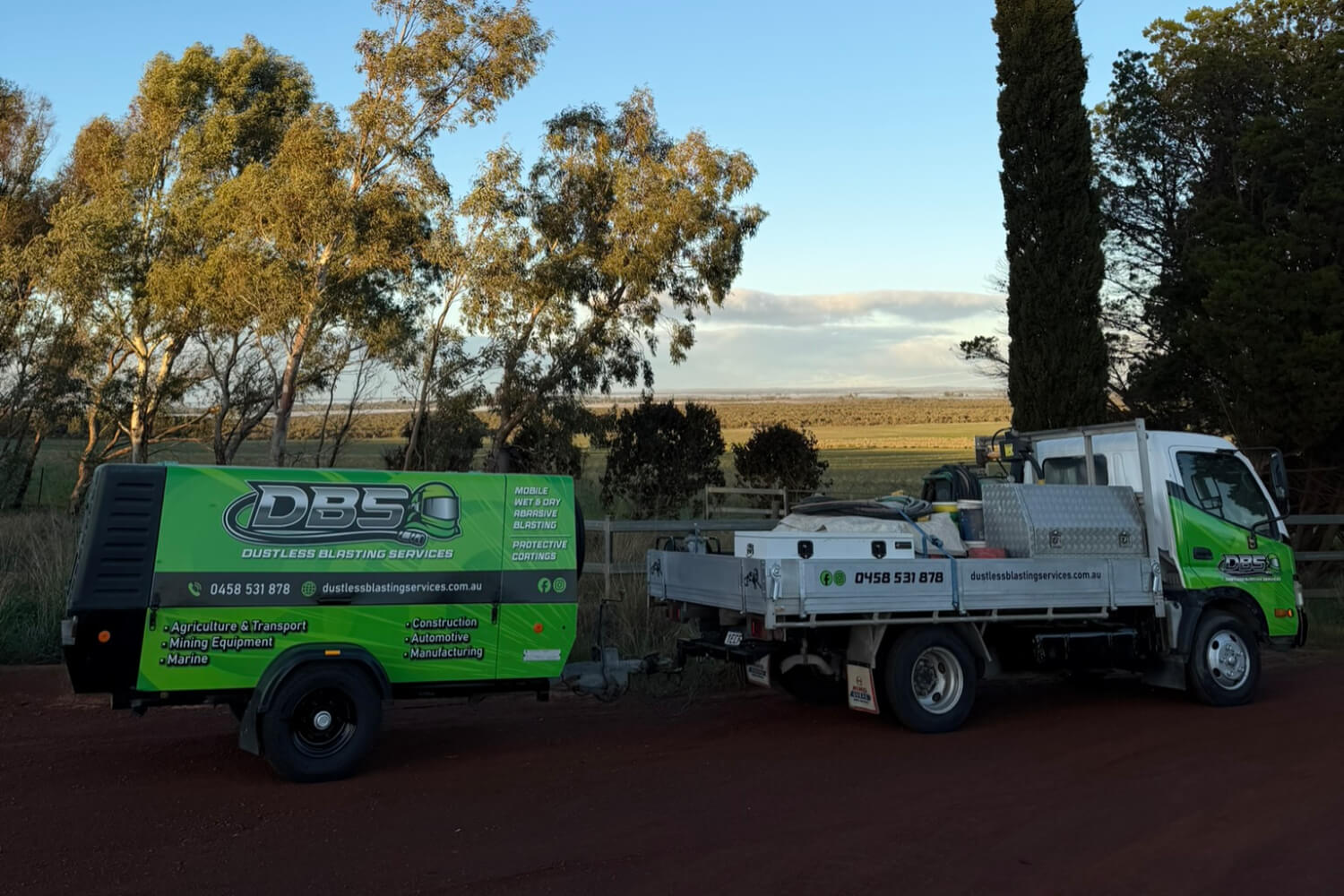
Yes. The rig carries its own compressed air, water, abrasive and containment, so we work at your home, workshop, depot, farm, hardstand or site without drawing on your services. Components and coating work can come to our workshop instead.
What is the difference between sandblasting and dustless blasting?
Dustless blasting is sandblasting with water injected into the abrasive stream. The abrasive still cuts, but the fines drop at your feet instead of forming a plume, and the surface stays cool so thin panel does not warp.
Do you paint and coat after blasting?
Yes. Bare steel needs coating the same day in Perth humidity, so doing both means the primer goes on inside the window. We can also handle mechanical repairs and component replacement around the blast.
What areas do you cover?
The Perth metro at our standard rate, the Peel and South West on batched trips, and the Goldfields on scheduled runs — Fremantle, Rockingham, Kwinana, Mandurah, Bunbury, Busselton, Kalgoorlie and everywhere between. See service areas.
Will blasting damage my surface?
Not at the right media and pressure for the substrate. Damage comes from running one aggressive setup across everything. On brick, limestone, timber, alloy and gelcoat we drop the pressure, change media and test a hidden section first.
What does sandblasting cost in WA?
It depends on square metres, how many coatings are on the surface, access, containment and the standard required. Our guide to what blasting costs in WA sets out the drivers, and quotes are free inside the metro.
Where we work
Perth, the South West and the Goldfields
Metro at the standard rate, regional in batched trips. Every area has its own page with the local work and what travel looks like.
Rockingham & Kwinana
Peel & South West
North coast
Reviews
What customers say
Every review below is a verbatim Google review of Dustless Blasting Services. Nothing has been edited, shortened or paraphrased.
★★★★★
Very happy for the blasting and painting work Tim did on our strata property. Great communication, he was ontime with no hassles. Highly recommend.
★★★★★
We needed the concrete block work cleaned at one of our projects. Cleaning this with the regular pressure wash method didnt work. I looked up alternatives and stumbled upon Dustless Blasting Services. Their service was fantastic and the end result was better then expected. Very impressed and highly recommend Dustless Blasting Services.
★★★★★
Tim was across all the details effortlessly and the van turned out better than expected. Can’t recommend them enough
★★★★★
Tim does great job and no issues every time we have used his services.
★★★★★
Fair priced, realistic with deadlines, great finished product.
Get a quote
How do you get a quote?
Send the job through and we will come back with a fixed price. Site looks are free inside the Perth metro, and we will tell you honestly if the job is better suited to someone else.